Understanding Electrical Certificates of Compliance
- Taurick Stofberg

- May 10
- 5 min read
Beyond the Paperwork
By Taurick Stofberg — Registered Installation Electrician
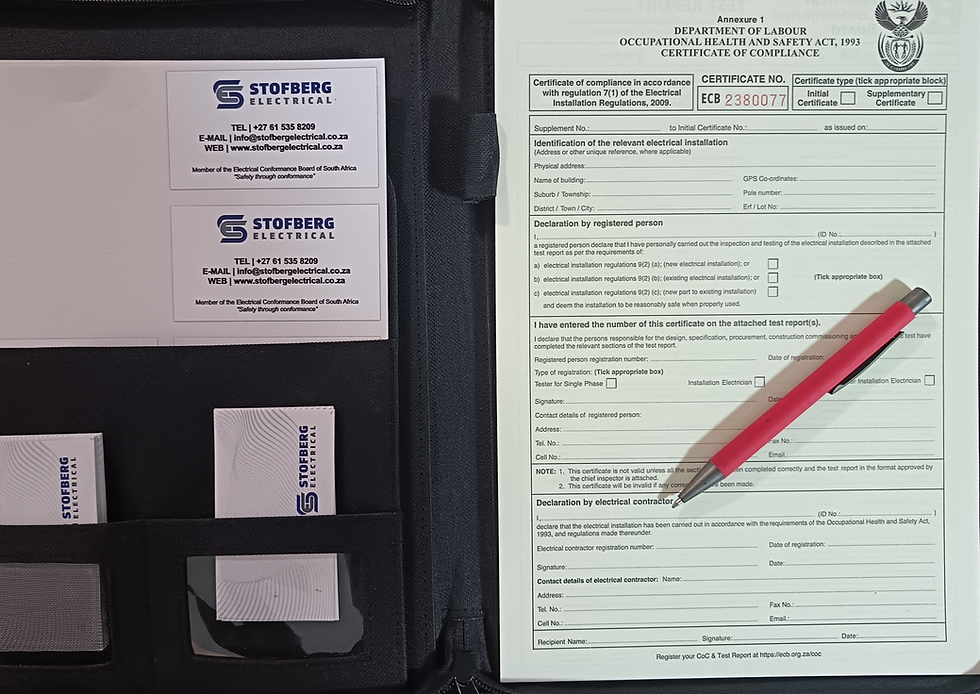
In South Africa, the Electrical Certificate of Compliance (CoC) is often viewed simply as a document required during the sale of a property. In reality, a CoC represents something far more important: a professional declaration that an electrical installation has been inspected, tested, and assessed against the applicable safety regulations governing that installation.
As residential electrical systems become increasingly complex — particularly with the rise of solar, inverter, and backup power systems — misunderstandings surrounding compliance have become more common. Homeowners, estate agents, and property professionals are frequently confronted with conflicting information regarding what constitutes a compliant installation, what remedial work is genuinely necessary, and who is legally authorised to issue certification.
Not All Registered Persons Operate Within the Same Scope
One of the least understood aspects of electrical compliance is that South African regulations recognise different categories of registered electrical persons, each operating within a defined scope of authority.
These include:
Single Phase Tester for Single Phase
Installation Electrician
Master Installation Electrician
Each category carries different certification responsibilities and limitations.
Modern residential systems increasingly incorporate:
solar PV arrays,
battery storage,
hybrid inverters,
embedded generation,
and more advanced protection coordination requirements.
As installations become more technically involved, the scope of the registered person responsible for certification becomes increasingly important.
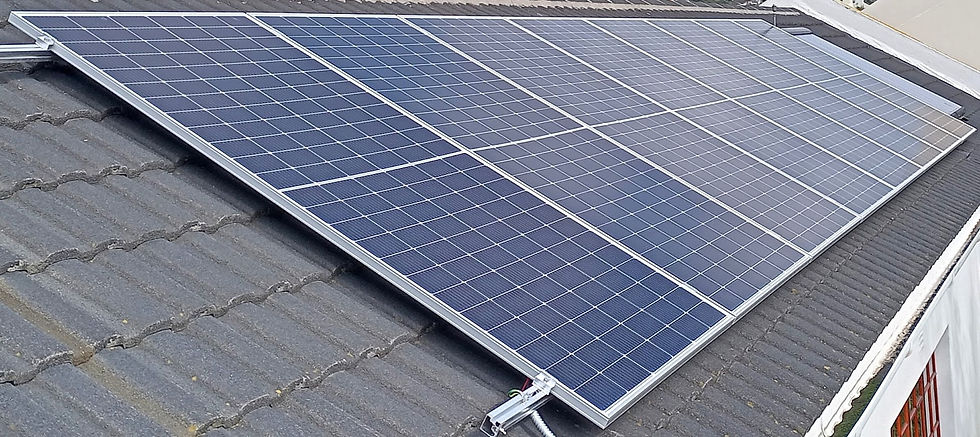
In one recent case involving a residential solar installation, a homeowner encountered delays during the municipal registration process after a Certificate of Compliance had been issued for an installation containing solar and DC components outside the certification scope of the registered person involved. Although the system had already undergone professional engineering sign-off, additional corrective administrative and compliance work was still required before approval could proceed.
Situations such as these highlight the importance of ensuring that the registration category of the contractor aligns with the nature and complexity of the installation being certified.
At the highest level of registration is the Master Installation Electrician (MIE), a category associated with specialised and hazardous electrical environments, including sectors such as:
petroleum,
mining,
industrial processing,
and explosive-risk installations.
These environments involve additional technical, environmental, and safety considerations beyond those encountered in conventional residential systems.
Older Installations and Modern Regulations
Another common area of confusion during property transfers relates to older installations and newer editions of the wiring regulations.
South African electrical standards evolve over time through periodic amendments to SANS 10142-1, commonly referred to as the Wiring Code. As a result, older homes often contain installation methods that differ significantly from those used in modern construction.
Importantly, however, installations are generally assessed against the regulations applicable at the time the installation was originally completed, provided the installation remains safe and has not been altered in a manner that compromises compliance.
This distinction is significant.
Many older properties in areas such as the Southern Suburbs and South Peninsula still contain historically accepted installation methods that remain technically functional and compliant within their original regulatory context.
In one recent inspection involving an older home, extensive rewiring work had initially been proposed due to the absence of modern dedicated earth continuity conductors. Upon further inspection and continuity testing, the original metallic conduit system was found to remain electrically continuous and functionally effective as part of the historical protective earthing arrangement. The result was a substantially more proportionate remedial scope while still maintaining compliance and safety requirements.
These situations highlight why older installations require informed technical interpretation rather than purely mechanical comparison against modern construction methods.
Compliance Problems Often Arise From Later Alterations
One of the more surprising realities for homeowners is that the most significant compliance issues frequently do not originate from the original installation itself.
In practice, many older installations remain fundamentally sound within the framework of the regulations applicable at the time they were installed. More substantial problems often arise from later additions, modifications, and undocumented alterations carried out over many years.
These may include:
informal extensions,
altered DB boards,
additional plug circuits,
inverter additions,
garage conversions,
outdoor wiring,
and uncertified electrical modifications.
Homeowners are often unaware that even relatively small electrical additions or alterations should be properly certified at the time the work is completed.
Retaining supplementary Certificates of Compliance for additions and modifications can significantly reduce uncertainty, delays, and unexpected corrective costs during future property transfers.
The Importance of Technical Judgement
Modern electrical compliance involves considerably more than checking whether lights switch on or sockets function correctly.
Behind every compliant installation are safety principles involving:
fault clearance,
earth continuity,
earth fault loop impedance,
voltage drop,
cable sizing,
protection coordination,
and appropriate protective device operation.
As newer safety requirements are introduced into older installations, additional practical considerations can also arise.
One example is the increased use of earth leakage protection for hot water cylinders (geysers). While the safety objective behind these requirements is entirely appropriate, older heating elements with long-standing insulation deterioration may begin tripping earth leakage protection once additional protection is introduced.
This does not necessarily indicate a faulty earth leakage device. In many cases, the additional protection is correctly detecting leakage conditions that previously went unnoticed.
Situations such as these require careful technical evaluation, informed interpretation, and clear communication with homeowners.
Does a Certificate of Compliance Expire?
One of the most common misconceptions surrounding CoCs is the belief that a certificate automatically “expires” after two years in all circumstances.
In reality, the two-year period primarily relates to property transfer requirements.
A homeowner living in a property is not automatically required to obtain a new CoC every two years simply because time has passed. However, during the transfer of ownership, a valid certificate is generally required if the existing CoC is older than two years.
The more important consideration is whether additions or alterations have been carried out since the certificate was originally issued.
Whenever modifications are made — particularly involving:
solar systems,
inverter installations,
DB alterations,
extensions,
or additional circuits —
supplementary certification should be issued for the affected portions of the installation.
Proper certification and record retention not only support smoother property transfers in the future, but also contribute to:
installation traceability,
ongoing electrical safety,
regulatory compliance,
and insurance-related documentation requirements.
Verifying Electrical Contractor Registration
Homeowners are often unaware that electrical contractors issuing Certificates of Compliance are required to hold valid registration as registered electrical contractors under the applicable regulations.
In practice, this means that legitimate contractors issuing CoCs should be able to provide:
proof of registration,
registration details,
and evidence of current contractor licensing where applicable.
Historically, the Electrical Conformance Board of South Africa (ECB) played a significant role in the administration and registration framework surrounding the electrical contracting industry before portions of these responsibilities transitioned back under the Department of Employment and Labour.
As a result, organisations such as:
the Electrical Conformance Board (ECB),
and the Electrical Contractors Association of South Africa (ECA)
remain widely recognised within the industry and continue to serve as important reference points for contractor verification, industry standards, and professional accountability.
Homeowners, estate agents, and property professionals are encouraged to verify contractor credentials wherever possible, particularly when electrical compliance certification forms part of a property transaction or major installation project.
Stofberg Electrical is a registered electrical contractor operating in accordance with the applicable regulatory requirements of the Department of Employment and Labour.
Taurick Stofberg is a registered Installation Electrician with industry experience spanning residential, commercial, industrial, infrastructure, and distribution environments.
Stofberg Electrical has remained registered with the Electrical Conformance Board framework since inception and continues to operate within the professional compliance structures governing the South African electrical industry.
At its core, a Certificate of Compliance should never be viewed as merely a transfer requirement or administrative formality. It is ultimately a declaration of responsibility, technical assessment, and public safety.
In a world of shortcuts, proper compliance still matters.
Comments